





LUCIANA BORA
(1926-2007)
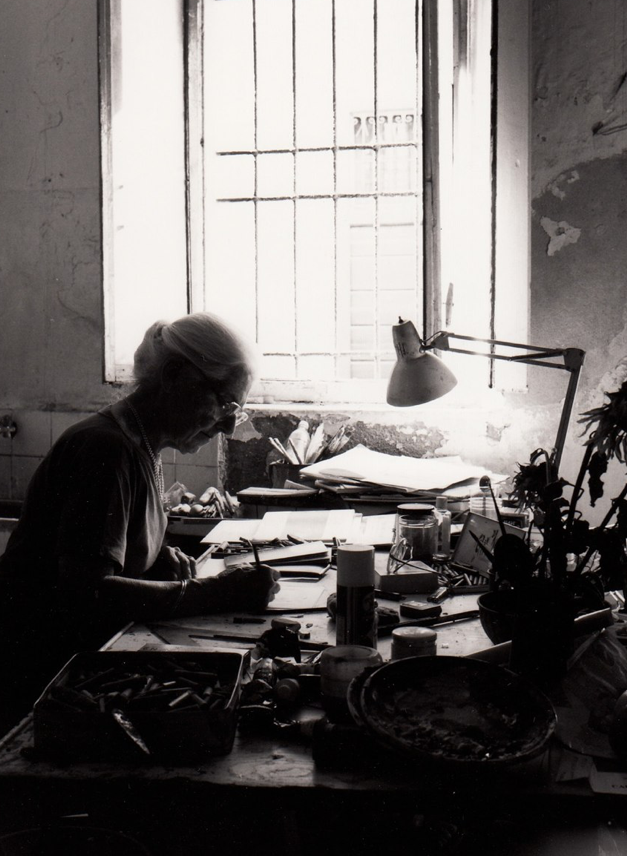
"Maybe one day I will be find in the light (something is already there) what I am looking for".
This was written by Luciana Bora in 1953 in a letter to a friend. Three years before she had completed her studies at the Accademia di Brera under the guidance of the masters Achille Funi, Carlo Carrà and Aldo Carpi.
Brera - the most loved place, as she usually said when, as an old lady, she walked the streets around it - had been her world since 1941.
In 1941 she had joined the renowned school of art, at that time led by Fernanda Wittgens; Ugo Vittore Bartolini, Umberto Vittorino and Guido Ballo were her teachers.
Bora stays in contact with her teachers for years and writes in a letter to Iso Papo, a fellow student at the Accademia, telling about her participation to the Youth Olympics: "De Grada has talked on the radio about me and Ballo has quoted me in an article on the Avanti, and I have been told that Casorati liked very much one of my landscapes".
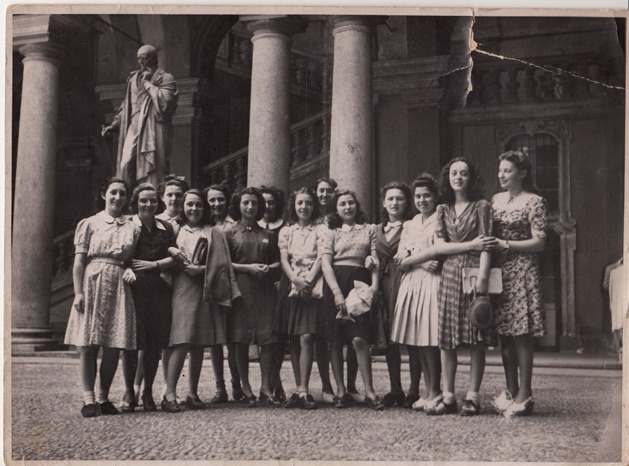
From September 1945 she is at the Accademia, opened again after the war and led by Aldo Carpi. Carpi, a jewish painter, was elected Dean by acclamation after he survived the nazi internment.
Looking at the student list you can catch a glimpse of the artistic expressions that are about to explode: Enrico Baj, Alik Cavaliere, Roberto Crippa, Gianni Dova, Dario Fo, to name just a few.
Bora attends the painting class of master Achille Funi, the large classroom is shared with Carlo Carrà with no communication between the two groups. Carrà is often replaced by his assistant, while Funi's students are closer to the master, as reported in a Bora’s letter to Iso Papo during 1950’s summer: "I am writing on a terrace, below us there is a garden and in the garden a nice girl is watering the flowers. She is our landlord’s maid, she is so pretty and I would like to paint a portrait of her [...] Funi, with his classicism, would appreciate very much her profile".
For the students the Accademia is a necessary place of compulsion: they are future artists and they know the importance of discipline. At the end of the studies, the feeling of freedom develops in different ways: in Luciana Bora through a personal research on color.
She does not join the nuclearist trends of some friends at the Accademia and stays away from abstraction. It is probably due to the silence surrounding her and carrying memories of a romantic music (Beethoven, Schubert) often listened at home until her sickness (at ten she became deaf after a meningitis) and studied even after that time in the attempt to fight a never totally accepted destiny.
She had never listened to the new music which, from Stockhausen to jazz, often plays side by side with abstract arts.
The painter’s totalizing view can also be seen in a positive way, like when she tells about looking at the garden in a magic light, probably even more enchanting thanks to the mute suspension: “Sometimes I think it is just fine not to hear. Maybe a train was passing by, or perhaps a car in the street below, but for me there was nothing but the sun over the flowers and the deep green of the trees".
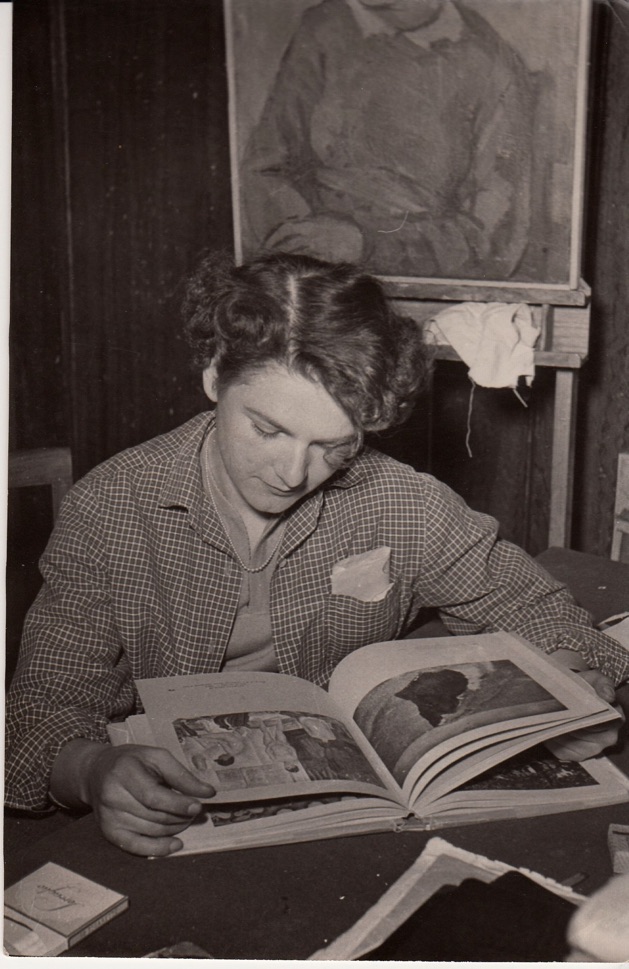
In 1952 Luciana Bora looks for a studio to share with Giorgina Toschi, a Brera classmate; after two attempts, they rent a corner of the large studio of two other former classmates, the sculptors Alik Cavaliere and Giancarlo Sangregorio, in the center of Milan.
"A real, large studio, with windows on the ceiling. And as I started working there I felt the good old days of Brera coming back, but even better because I feel free in doing what I want", Luciana writes enthusiastically to Papo, now living in Boston. Isa Pizzini, classmate at Brera and follower of Marino Marini, joins the two girls ("she knows what she wants" writes in a letter an admired Bora), but soon she leaves the workshop for Paris thanks to a grant.
In 1954 Bora has her first solo exhibition, pushed by her father who helps finding a gallery. This is his personal way to help his first daughter breaking the rules for girls at the end of the Accademia: "Today Barabaroux (the one of the gallery) confirmed that if for a man it is hard to live on his painting, for a woman it is impossible".
Her production is neither interrupted nor slowed down by her marriage, at the end of 1954, followed by the birth of her three children, but the family duties compromise her relationship with the art business, already challenged by her deafness.
Her extensive production of drawings and canvas starts in the fifties, still under the influence of her masters’ realism, and then takes its own path, well defined but not inscribed in a specific trend. This attitude is not so far from the inclination of many other painters of the same period, first of all Carpi. They refrain from taking part to a single trend, but without giving up a personal up to date research.
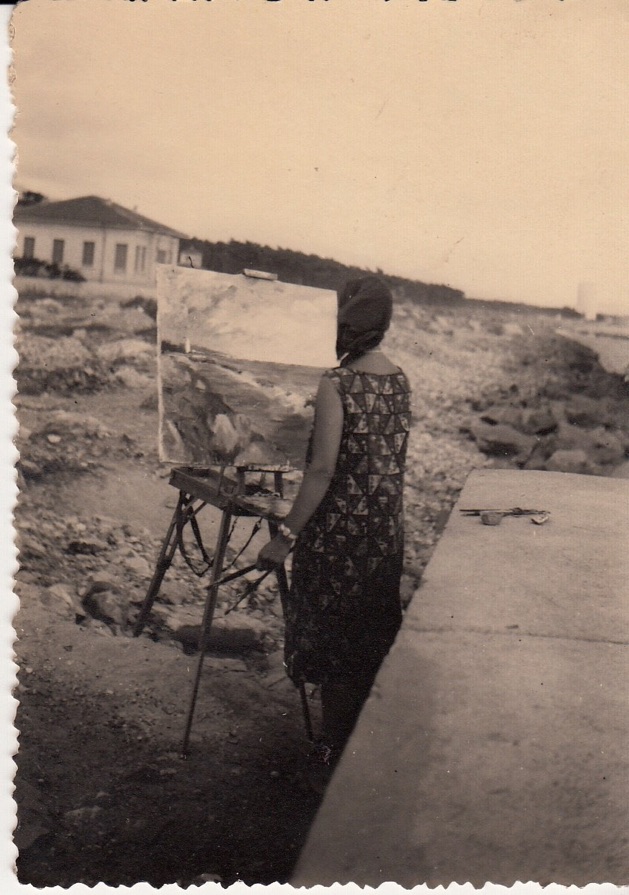
During the years Bora explores, in paintings and drawings, many recurring issues: landscapes, urban landscapes (quarries, suburban vegetal gardens, open air markets), figures (portraits, bathers, women in interiors, children, acrobats, musicians, scenes from the Bible), still lifes and many d'après from her favorite painters such as Vermeer, Rembrandt, Velázquez, Goya.
Pier Luigi De Vecchi, presenting a personal exhibition in 1974, writes: ”The conversation that each artist establishes between his creations and his natural and cultural environment, is in Luciana Bora's works a conversation that doesn't refuse expressions and genres of traditional painting: landscapes, figures, interiors with still life. The fundamental issue is the discovery, the constant rebirth of a miraculous emotion which is together an intense joy and a longing for the pulse of life, a life different from ours and which [...] mainly finds its expression in matching colors, sudden lightenings, continuous transitions [...]. From a feeling of reality poised between contemplative relaxation and joyful recreation, definitely tonal interiors and brighter landscapes are born".
Luciana Bora is a colorist. From a presentation in 1984 by Mario Portalupi: ”The painter Luciana Bora masters a rich technique, watercolor allied with pastel with the participation of a pencil that sometimes plots - I was writing nestles - the coloristic path which animates gardens and vegetals with a wide perspective".
Bora is totally at ease with painting and has an extreme control in drawing, as we can see in engravings, from the very first essays at the Brera Accademia with master Disertori and during her entire life. Engraving, etching and lithograph have been a lifelong complement to her paintings and drawings.
Luciana Bora's work is suddenly interrupted by her death at 81; she has been in activity for sixty years, but when her studio is opened everything inside it, from the drawings on the table, to the unfinished still life on the easel, the palette with the colors still fresh and their scent in the air, everything suggests the presence of a young woman still on a journey.